

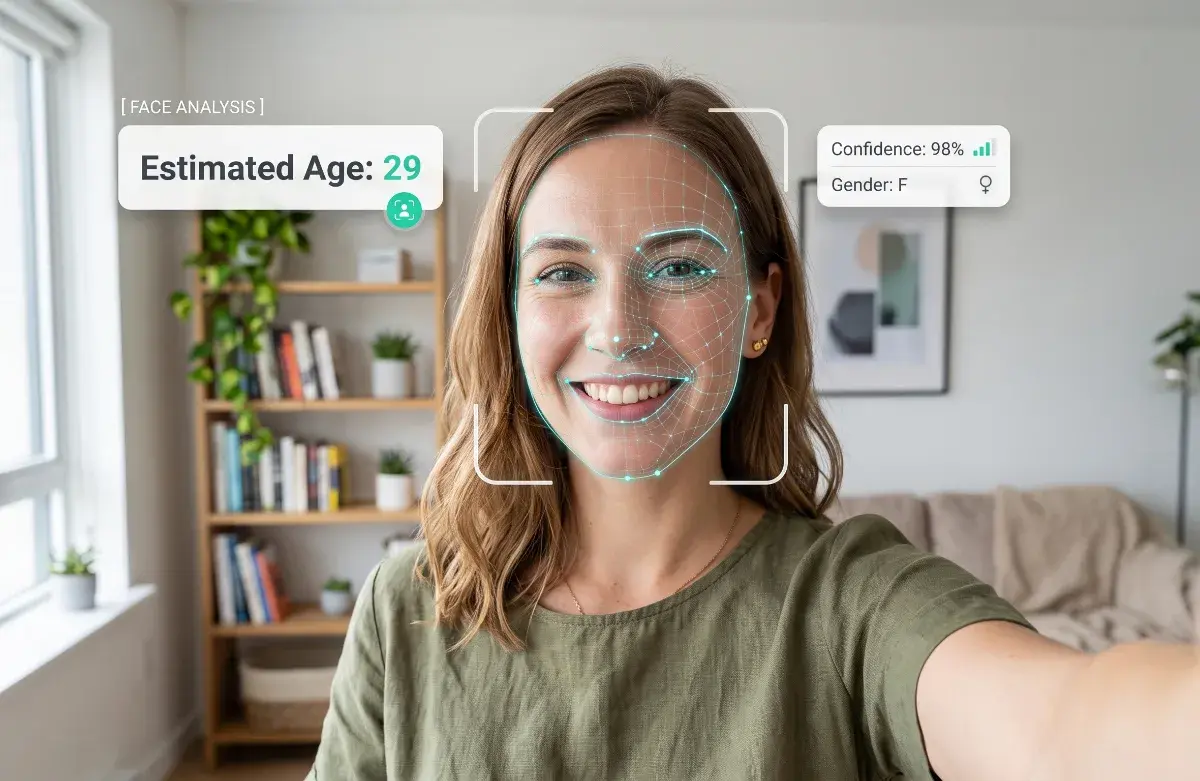
If you’ve ever stared at a selfie and wondered, “Okay, but how old do I look to other people?”, you’re not alone. The question “how old do I look” has quietly become one of the internet’s favorite curiosity searches, powered by TikTok trends and new AI age detector tools.
Today, you don’t have to crowd‑source guesses from your friends or followers—AI can estimate your facial age from a single photo in just a few seconds.
What Does “How Old Do I Look” Actually Mean?
When you ask “how old do I look,” you’re usually not asking for your official, legal age—you already know that. You’re asking a deeper question: how old does my face appear to other people and to algorithms trained to read facial cues.
That apparent age is shaped by details we mostly notice only when something feels “off”—fine lines, skin texture, volume in the cheeks, the heaviness of the eye area, and even posture and expression.
Perceived age vs. biological age
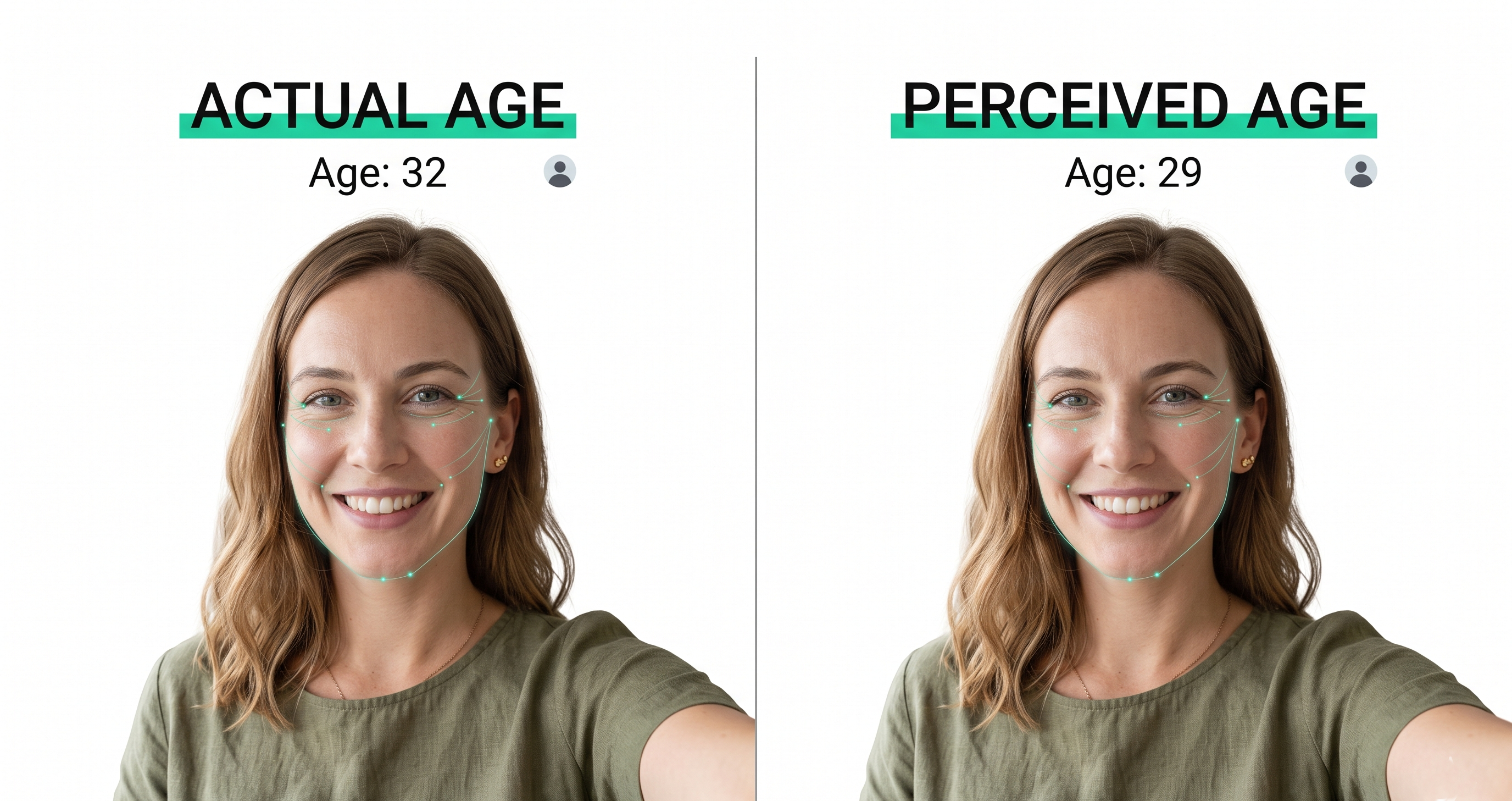
Biological age is the number of years you’ve lived—what’s written on your ID. Perceived age, sometimes called facial age, is how old your face looks based on visual signals like wrinkles, pigmentation, and facial structure.
Studies on age perception show that people and cameras can be surprisingly sensitive to the lower third of the face and neck when guessing age—areas where skin often shows laxity, lines, or volume changes first.
Because perceived age is driven by external cues, it can drift away from biological age in either direction: some people look noticeably younger than they are, while others feel young but look older in photos.
Why people are curious about their facial age
Curiosity about “how old do I look” has exploded in recent years because we see our faces more than ever—on front‑facing cameras, video calls, and social media feeds.
On TikTok, for example, creators routinely post close‑up videos and ask followers “How old do I look?” in the caption, watching thousands of comments roll in with age guesses and reactions.
For many people, running their face through an AI age detector is a way to reality‑check how lifestyle, skincare, and stress are showing up on their skin—and to see if they’re aging “fast” or “slow” compared to their actual age.
How AI Detects Age From a Photo
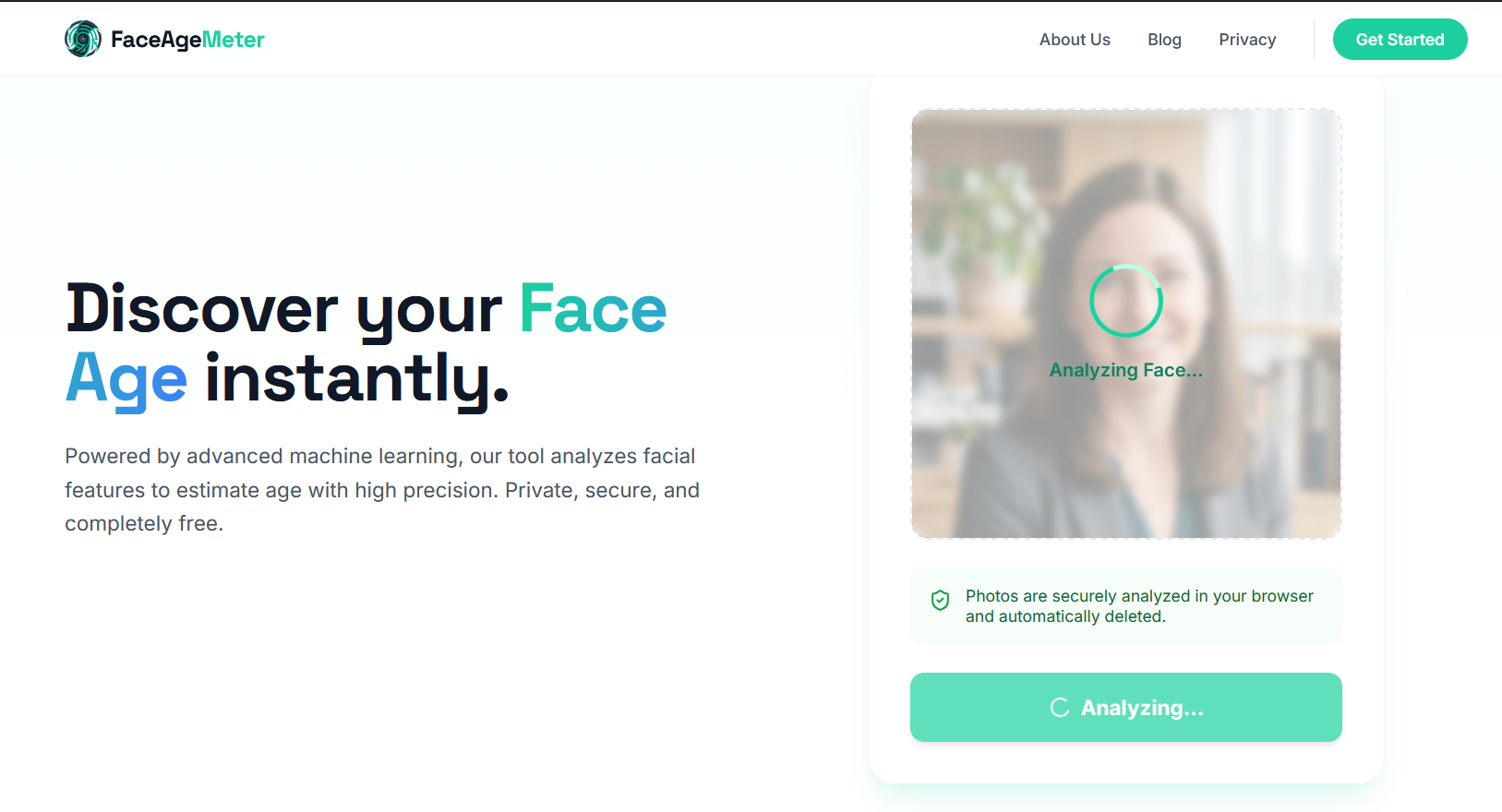
An AI age detector doesn’t “know” you personally. Instead, it’s trained on large datasets of faces labeled with age, and it learns which visual patterns tend to show up at different stages of life.
When you upload a photo, the system first finds your face, then measures dozens or hundreds of subtle features to estimate a likely age range and an exact age guess.
What the AI looks at (skin texture, facial structure, eyes) Most modern AI age estimators use facial landmarks—key points around the eyes, nose, mouth, jawline, and brow—to understand the shape and proportions of your face.
Once the landmarks are mapped, the model analyzes cues such as skin tone and texture, depth and pattern of wrinkles, firmness in the cheeks and jawline, and how fat and bone structure appear under the skin.
The eye area is especially important: dark circles, fine lines, and drooping lids can all shift perceived age, which is why algorithms pay a lot of attention to the region around your eyes.
How accurate is it really?
AI age detectors are surprisingly good at estimating broad age ranges—like “early 20s,” “late 30s,” or “50+”—because they’ve seen so many examples in training.
App descriptions and user reports suggest that, for many clear, well‑lit photos, age predictions can land within a few years of a person’s actual age; in cleaner datasets and controlled conditions, experiments have reported even tighter accuracy.
Still, the result is always an estimate, not a certified fact; if you regularly change your weight, have cosmetic procedures, or use heavy makeup, the AI might overshoot or undershoot your biological age.
Does lighting and angle affect results?
Yes. Almost every AI age tool recommends using good lighting and a clear, front‑facing photo because shadows and angles can distort the visual cues the model relies on.
Poor lighting can exaggerate dark circles, blur skin texture, or deepen lines, making you look older; harsh overhead light or strong side shadows can create contrast that the algorithm reads as extra aging.
Angles matter too: extreme high‑angle selfies can flatten features and smooth out perceived volume, while low‑angle photos can emphasize jowls, neck bands, or under‑eye hollows, pushing the age estimate upward.
Try It Yourself — Free AI Age Detector
If you want to see how old you look according to AI, FaceAgeMeter gives you a quick, free way to run the experiment from any device.
You upload a photo, the AI scans your facial features, and within a few seconds you see an estimated age—no sign‑up and no complicated settings to manage.
How to upload your photo
Start by choosing a clear photo where your entire face is visible—no heavy filters, no sunglasses or masks, and no one else partially overlapping your face.
Natural daylight or bright, soft indoor lighting works best; avoid dim rooms and strong backlighting that turn your face into a silhouette.
Then upload the image to the AI age detector, wait a moment while the model analyzes your facial landmarks and skin texture, and your result appears on screen.
What results you’ll get (age, gender, emotion)
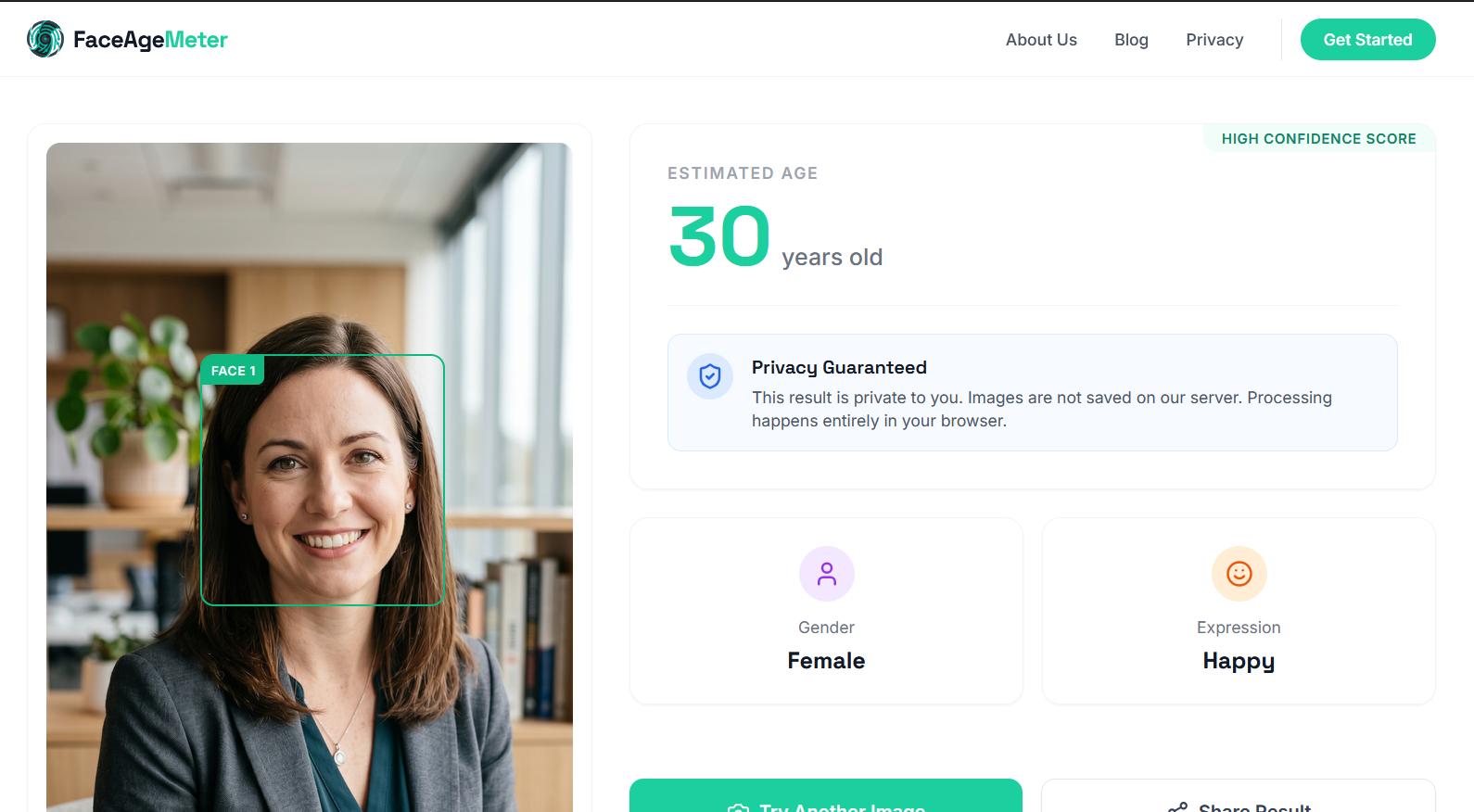
An AI face age detector will always show an estimated age, usually as a single number backed by an internal confidence score.
Many systems also infer basic gender presentation and simple emotion tags such as “happy,” “neutral,” or “surprised” based on your facial expression and overall appearance.
Taken together—age, gender, and emotion—these outputs provide a quick snapshot of how your face is being read by machines trained to recognize patterns in millions of images.
Is your photo safe? (privacy explanation)
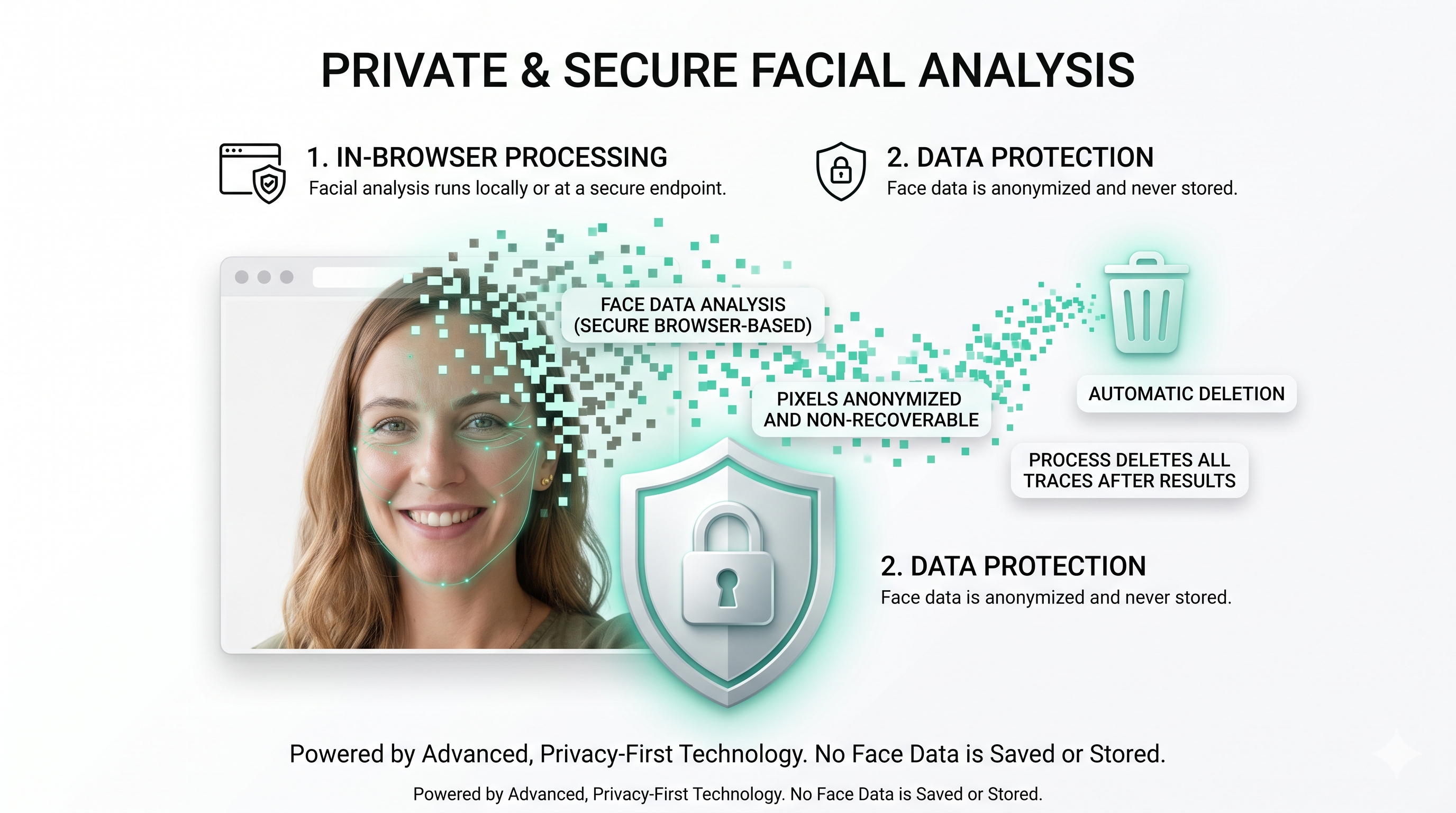
Privacy is a real concern with any tool that asks for your face, so reputable AI age detectors are designed to process photos temporarily and then delete them.
Several leading services explicitly state that images are processed in memory, never stored permanently, and never shared with advertisers or third parties.
When you use a face age calculator, look for a clear privacy notice: it should explain how long your photo is kept, whether it’s logged or saved, and confirm that results are based on appearance only—not tied to your identity or any personal account.
Tips to Look Younger According to AI
Because AI is trained to read visual signs of aging, its behavior quietly reveals what tends to make a face look older or younger on camera.
Instead of chasing perfection, you can use that knowledge to tweak a few habits and choices so your perceived age aligns more closely with how young you actually feel.
Skincare habits that reduce perceived age
Algorithms are sensitive to texture: rough, dehydrated skin and pronounced lines can nudge age estimates upward, while smoother, more even texture often reads as younger.
Consistent hydration, gentle exfoliation, and daily sunscreen help reduce the appearance of fine lines and discoloration over time, which can shift both human and AI age guesses downward.
Smoking, excessive sun exposure, and chronic sleep deprivation tend to accelerate visible aging, especially around the eyes and mouth, where expression lines and pigment changes gather first.
Best lighting for looking younger in photos
From the AI’s perspective, flattering light is usually soft, even, and front‑facing: it smooths shadows, reduces contrast in wrinkles, and brightens the eye area.
Try standing near a window with indirect daylight or facing a diffused light source indoors; avoid strong overhead lights that carve lines into your forehead and under‑eye area.
If you’re taking a selfie to test “how old do I look,” aim for eye‑level camera placement and neutral expression—extreme angles and exaggerated expressions can create folds and shadows that add a few “AI years” to your face.
Hairstyles that affect age perception
Hair frames the face, so small changes in cut and styling can significantly shift how old you look to others and to camera systems.
Styles that add volume around the crown and soften the jawline often make faces look fresher, while extremely flat, tight, or severe styles can emphasize facial structure and neck contours associated with aging.
Moreover, color choices—especially uniform, very dark tones without dimension—can exaggerate contrast with skin, whereas subtle highlights and softer tones tend to harmonize with the face and diffuse harsh lines.
Frequently Asked Questions
Can AI tell my exact age?
No AI age detector can guarantee your exact age; it’s always making an educated guess based on patterns learned from large datasets of faces and ages.
In many cases, the estimate will land close to your real age—especially if your photo is clear and your lifestyle hasn’t dramatically changed your appearance—but there will always be outliers.
Think of it as a fun, informative benchmark, not a verdict on how you “should” look.
What photo gives the best result?
The best photo for an AI age detector is a clear, front‑facing image with your whole face visible, taken in good, even lighting.
Avoid heavy makeup, filters, sunglasses, masks, and extreme angles; these all hide or distort cues like wrinkles, pigmentation, and facial structure that the algorithm needs to make a reliable estimate.
If you want to track changes over time, use similar lighting and framing every time you test “how old do I look” so you’re comparing like with like.
Is my photo stored anywhere?
Many privacy‑focused tools explicitly state that uploaded photos are processed on the server or in memory and then discarded, not stored or reused.
Before you upload, check the privacy or FAQ section: it should say whether images are logged, how long they’re kept, and confirm that they aren’t shared with third parties or used to train new models without consent.
If you don’t see a clear statement about deletion and non‑sharing, treat that as a signal to be cautious about using that particular “how old do I look” service.